Ingredient guide
BCAA 2:1:1 Blend in Neuro Mind Pro: What 270 mg Is and Is Not
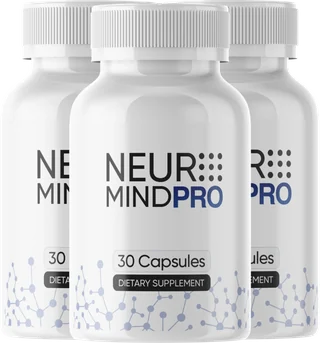
The BCAA 2:1:1 blend is the first line on the Neuro Mind Pro label image: leucine, isoleucine and valine, 270 mg in total per capsule. A review names 10 to 20 g a day as a common supplement amount, so the capsule carries a small fraction of that. The split is not printed.
Written by the Neuro Mind Pro label deskUpdated
The line01
What is the BCAA 2:1:1 blend in Neuro Mind Pro?
The BCAA 2:1:1 blend is a single label line that names three amino acids: L-leucine, L-isoleucine and L-valine. The label image supplied to us prints one amount for the whole blend, 270 mg per capsule, with no Daily Value established.
BCAA stands for branched chain amino acids. All three are essential amino acids, which means the body cannot make them and they must come from food (MedlinePlus, Amino acids).
The ratio 2:1:1 describes the proportions of leucine, isoleucine and valine. Most studies in a 2022 review used mixtures with more leucine than isoleucine or valine (Holeček 2022, Side Effects of Amino Acid Supplements), so a 2:1:1 mix is the common pattern. The review is about the amino acids in general. No study we found tested this capsule or this mix of five lines.
The brand describes the product as designed to support “cognitive function and mental clarity”. That is the brand's wording. We found no source that ties a 270 mg BCAA amount to any such outcome, and we do not make that claim.
The arithmetic02
How much leucine, isoleucine and valine is in each capsule?
The label does not say. If the 2:1:1 ratio is by weight, the arithmetic gives 135 mg of leucine and 67.5 mg each of isoleucine and valine. That is our calculation, not a printed figure.
Federal rules let a blend list one total weight for the group instead of a weight for each member (21 CFR 101.36 (eCFR), Supplement Facts and proprietary blends). So a label can be fully lawful and still leave the split open. A ratio can also be by moles or by another measure, which is why we mark the numbers below as an if-then.
| Amino acid | Share if 2:1:1 by weight | Amount per capsule | Printed on the label image? |
|---|---|---|---|
| L-leucine | 2 parts of 4 | 135 mg | No |
| L-isoleucine | 1 part of 4 | 67.5 mg | No |
| L-valine | 1 part of 4 | 67.5 mg | No |
| Blend total | 4 parts of 4 | 270 mg | Yes |
If the split matters to you, for example because of a medical condition, ask the seller for the per-amino-acid figures and read your own bottle. Our page on blend totals covers why a total hides the split.
Studied amounts03
How does 270 mg compare with the BCAA amounts in studies?
A 2022 review states that a common BCAA supplement amount is 10 to 20 g a day, and that some studies used 60 g a day (Holeček 2022, Side Effects of Amino Acid Supplements). At 270 mg, the capsule holds 2.7% of 10 g and 1.35% of 20 g.
The label amount is lower than the amounts described in this source. That says nothing about whether the capsule is safe or useless. It says only that the studies in the review used much larger amounts of BCAAs than one capsule carries. The studies used other products and groups, and we found no durations.
The comparison. A 2022 review says a common BCAA supplement amount is 10 to 20 g a day. The bar uses the low end, 10 g. At 20 g the label amount is 1.35%. (Holeček 2022, Side Effects of Amino Acid Supplements)
Read it with care. The studied amount comes from a different product, group and time span. It is not a recommended or effective dose, and no trial tested Neuro Mind Pro.
The comparison. StatPearls gives 300 to 450 mg a day of extract and LiverTox gives 300 to 600 mg. The bar uses 300 mg, the low end of both. The label amount is 22% to 33% of 300 to 450 mg. (StatPearls, Bacopa monnieri) (LiverTox, Bacopa monnieri)
Read it with care. The studied amount comes from a different product, group and time span. It is not a recommended or effective dose, and no trial tested Neuro Mind Pro.
The comparison. LiverTox gives a recommended daily range from about 100 mg to over 1,000 mg depending on product form and use. The bar uses the low end, 100 mg. (LiverTox, Ginseng)
Read it with care. The studied amount comes from a different product, group and time span. It is not a recommended or effective dose, and no trial tested Neuro Mind Pro.
Each full bar is the daily amount used in the one study or reference we cite. The filled part is the label amount per capsule, set against the low end of the range the source gives. Rhodiola and L-theanine have no bar: the pages we cite give no studied amount. Extract types and standardization differ between studies and the label, so even this comparison is rough, and a studied amount is not a recommended one.
In grams, 270 mg is 0.27 g. To reach 10 g from capsules of this size you would need about 37, and the label image says not to exceed the recommended dose. We do not suggest taking more than the label allows. The comparison is there so a reader can see that results from large-dose studies are not results for one capsule.
What the source says04
What does the review say about BCAAs and the brain?
The review is a scientific overview of BCAA metabolism and supplementation, not a trial of a capsule. It reports no evidence of cancer-causing effects, gene damage or the kind of nerve damage seen in maple syrup urine disease, and it also lists situations where BCAA loads may do harm (Holeček 2022, Side Effects of Amino Acid Supplements).
It notes that an excess of BCAAs may lower the brain uptake of other amino acids, namely phenylalanine, tyrosine, histidine and tryptophan (Holeček 2022, Side Effects of Amino Acid Supplements). It says a BCAA load may be detrimental with liver disease or raised ammonia production, and that BCAA supplementation in diabetes appears to be inappropriate (Holeček 2022, Side Effects of Amino Acid Supplements).
NCCIH notes a lack of direct evidence that supplements can prevent Alzheimer's disease or other dementias (NCCIH, 7 Things To Know About Dietary Supplements for Cognitive Function, Dementia, and Alzheimer’s Disease). NIA says no vitamin or supplement is recommended to prevent Alzheimer's or other cognitive decline (NIA, Cognitive Health and Older Adults). Neither page covers BCAAs. They neither back nor rule out this line.
What this means for a reader. We found no study of a 270 mg BCAA blend and thinking or memory outcomes. The honest summary is that the question is open, and that a capsule at this amount is far below the amounts in the studies we read.
Ask first05
Who should ask a doctor before taking a BCAA supplement?
Anyone with liver disease, diabetes or maple syrup urine disease should ask a doctor first. Anyone who is pregnant or nursing, under 18, or living with a known medical condition is told to consult a physician by the label image itself.
Maple syrup urine disease is a condition in which the body cannot break down leucine, isoleucine and valine, so they build up and are toxic to the brain and other organs (MedlinePlus Genetics, Maple syrup urine disease).
| Situation | What the source says | Source |
|---|---|---|
| Liver disease | A BCAA load may be detrimental | BCAA review |
| Diabetes | Supplementation appears to be inappropriate | BCAA review |
| Maple syrup urine disease | The three amino acids build up and are toxic | MedlinePlus |
| Any medicine | Tell your doctor and pharmacist about every supplement | FDA |
The FDA asks people to tell a health professional about every supplement they take and notes that supplements can change how medicines work (FDA, Mixing Medications and Dietary Supplements Can Endanger Your Health). We found no BCAA interaction list in the sources we fetched, so we give no medicine-by-medicine advice here. Keep taking any prescribed medicine, and show the label to a pharmacist before the first capsule. The medicine check has a short question set.
Bottom line06
What is the bottom line on the BCAA blend?
The BCAA line is a small, unsplit total of three essential amino acids. The studies we read used amounts tens of times larger, and none tested this capsule.
That is a reason to read the label with care, not a reason to dismiss it or to rely on it. A supplement is not a treatment, and memory or thinking problems have causes only a doctor can sort out (MedlinePlus, Memory loss). If you notice getting lost in familiar places, repeating questions or trouble following directions, those are signs to talk with a doctor (NIA, Memory Problems, Forgetfulness, and Aging).
For the whole label, see the label and facts page. For the order link and our working prices, see pricing, and confirm everything at checkout.
FAQ07
Neuro Mind Pro questions people ask
What is the BCAA 2:1:1 blend?
It is a label line naming L-leucine, L-isoleucine and L-valine. The label image supplied to us prints one total of 270 mg per capsule and a 2:1:1 ratio. It does not print the amount of each amino acid.
How much leucine is in Neuro Mind Pro?
The label does not say. If 2:1:1 is by weight, the arithmetic gives 135 mg of leucine and 67.5 mg each of isoleucine and valine. That is our calculation, not a printed figure.
Is 270 mg of BCAAs a lot?
No, compared with studies. A 2022 review names 10 to 20 g a day as a common supplement amount, so 270 mg is 2.7% to 1.35% of that. The studies used other products and groups.
Do BCAAs improve memory?
We found no study showing that a 270 mg BCAA blend does. NCCIH notes a lack of direct evidence for supplements and dementia, and its page does not cover BCAAs.
Who should not take BCAAs without asking a doctor?
People with liver disease, diabetes or maple syrup urine disease should ask first. So should anyone who is pregnant or nursing, under 18, on medicine or living with a known medical condition.
Who wrote this08
Written and reviewed by
Pages built from the bottle label and linked NIH, CDC, FDA, FTC and peer-reviewed sources.
Last updated . Read our editorial standards and how we check reviews. This website is the information site of a U.S. retail partner for Neuro Mind Pro. It is not the manufacturer, and it is not the sales page where orders are placed. We earn money when you buy through our order links.
Keep reading
More about Neuro Mind Pro
U.S. retail partner
Ready to try Neuro Mind Pro?
Read the panel on your bottle, check with your pharmacist if you take any medicine, then pick a pack. Every pack comes with a money-back guarantee; confirm the window and terms at checkout.
- Order on the sales page
- Money-back guarantee (confirm the window)
- Shipping shown at checkout